
You are stubborn, I am stubborn.
"You are stubborn, I am stubborn." is an apologue set in the Venezuelan savanna that tells the conflict between an old llanero and an anaconda. The old man, obsessed with revenge, ignores the advice of his friend and the warnings of the owl "Know-It-All". The anaconda, for her part, also has a score to settle with the llanero, who nearly killed her with a single machete blow. Both characters, trapped in a cycle of hatred and stubbornness, head toward a tragic ending that invites reflection on the difference between what we believe is urgent and what truly matters in life.
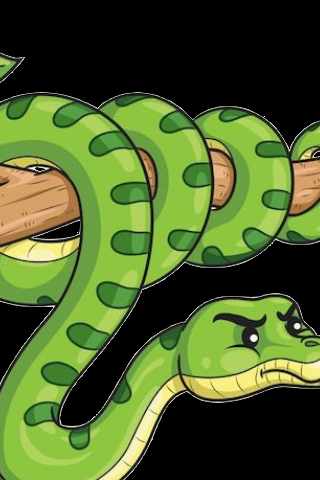
Literary Analysis
Genre: Apologue
"You are stubborn, I am stubborn." is a modern apologue set in the Venezuelan savanna that uses the figure of the "stubborn one" — someone who insists obstinately on something, often without reason — to reflect on the difference between what we believe is urgent and what truly matters in life. Through a conflict between an old llanero and an anaconda, the story explores stubbornness, revenge, and the confusion between subjective desire and the objective purpose of existence.
1. Genre and Structure
The story belongs to the apologue, a brief narrative genre with a didactic or moral intent that, unlike the fable, does not explicitly state its moral at the end but lets the reader deduce it from the action itself. While the fable, featuring animals, concludes with an explicit moral sentence ("the moral is..."), the apologue — heir to the tradition of Aesop but also Voltaire, Borges, or Kafka — presents characters (human and animal) whose actions embody a philosophical reflection that the reader must interpret.
"You are stubborn, I am stubborn." participates in both traditions: its animal characters (the anaconda, the flamingos, the owl) speak and act like humans, but the lesson is not formulated as a closed sentence but as an open reflection that the owl — the wise observer — presents at the end. It does not say "don't be stubborn" but invites reflection on the difference between the fundamental and the urgent. This interpretive openness brings the story closer to the philosophical apologue than to the moralizing fable.
The narrative structure follows a classic three-act scheme:
- Exposition: The conflict between the old llanero and the anaconda is introduced, with interventions from the owl ("Know-It-All") and the friend ("The Friar"), who warn of the dangers of stubbornness and hatred.
- Rising Action: The old llanero searches for the anaconda in the swamp, finds her, but his machete gets stuck in a log, and the anaconda coils around and kills him.
- Resolution: The friend searches for the llanero, the National Guard kills the anaconda, they recover the body, and the owl reflects on the meaninglessness of revenge.
The narrator is omniscient in the third person, but his tone changes throughout the story: sometimes he dwells on the characters' inner lives ("thought the old man"), sometimes he adopts a distant and critical perspective ("an immoral luxury for lovers of irresponsible fashion"). This versatility allows the reader to experience the same dissonance as the characters: the beauty of the landscape and the brutality of the conflict, the closeness of friendship and the distance of death.
2. Characters and Symbolism
Each character in the story fulfills a precise narrative and symbolic function:
- The old llanero ("The Caiman of Guasdualito"): The human protagonist. He symbolizes destructive stubbornness and revenge as forces that cloud judgment. His obsession with killing the anaconda blinds him to the point of mistaking a log for his enemy.
- The anaconda ("The Coiler"): The animal antagonist. She represents instinctive nature and the indifference of the natural world.
- The friend ("The Friar"): The advisor. He embodies the voice of reason and friendship that tries to save his companion from himself. His advice — "Hatred brings no peace, only bitterness" — is the antithesis of the old llanero's attitude.
- The owl ("Know-It-All"): The wise observer. He represents ancestral wisdom and the ability to see the whole picture. He is the one who pronounces the final moral and who, ironically, is a passive witness to the tragedy, unable to prevent it.
- The pig (Bacon): The "MacGuffin" of the story. It is the object of the anaconda's desire and the trigger for the conflict, but its function is purely instrumental.
- The flamingos: They act as a chorus representing popular opinion and common sense, which the anaconda ignores.
3. The Parallel with Moby Dick
The anaconda functions as the old llanero's Moby Dick. Just as Captain Ahab obsessively pursues the white whale, the old llanero turns the anaconda into the sole object of his existence, a nemesis that gives his life meaning but also destroys it. Both characters share a self-destructive obsession: they seek not survival but revenge; they act not out of necessity but out of pride.
However, the parallel also shows significant differences that enrich the reading of "You are stubborn, I am stubborn.":
- Moby Dick is a white whale, an animal that Captain Ahab turns into a symbol of cosmic evil, the unreachable, and untamable nature. Ahab's obsession is metaphysical and transcendent.
- The anaconda is a concrete animal that acts on instinct, but she is not a mere passive animal. She has memory and awareness of danger: she also has a score to settle with the llanero. From the beginning, she makes it clear that the llanero "nearly took my head off with a single machete swing." The anaconda does not hate the llanero by nature but because he attacked her first.
This difference is key: Ahab pursues a whale that does not know he exists; the llanero and the anaconda pursue each other, trapped in a cycle of mutual grievances. The anaconda is not the passive Moby Dick of Captain Ahab but an active antagonist who also seeks revenge. The old llanero's obsession is therefore more realistic and tragic: he pursues not a cosmic symbol but an animal that hates him with the same intensity with which he hates it.
The parallel also extends to the advisor friend. In Moby Dick, Starbuck tries to dissuade Ahab; in "You are stubborn, I am stubborn.," the friend ("The Friar") tries to reason with the llanero. In both cases, the voice of reason is ignored, and tragedy ensues.
4. Central Themes
Stubbornness as a self-destructive force. The title itself is the theme: to be stubborn means to insist obstinately on something, often without reason. Both the llanero and the anaconda are stubborn in their goal (kill / eat) and both die for it. Stubbornness is not a virtue but a vice that clouds judgment and leads to death.
The confusion between the subjective and the objective (central moral). The owl expresses it clearly: "There are folks who never can tell the difference between what truly matters and what their own desires make 'em think is urgent and important." The old llanero believes that killing the anaconda is urgent and important, but it is not fundamental. The anaconda, for her part, believes that eating the pig is her goal, but she is only following instinct. Both confuse desire with meaning.
Revenge and hatred. Hatred is presented as a poison that "salts" (corrupts) the soul. The friend warns: "Hatred brings no peace, only bitterness." Revenge destroys not only the other but also oneself. The tragic irony of the story is that the llanero dies for his obsession, and the anaconda also dies, and both could have avoided their fate.
Friendship and unheeded advice. The friend tries to save his companion, but the llanero does not listen. This highlights the loneliness of the stubborn: whoever does not accept advice remains alone in their error and drags others into their tragedy.
Nature as a neutral force. The savanna, the swamp, the anaconda: nature is neither good nor evil. It is indifferent to human conflict. The llanero's death is not divine punishment but a logical consequence of his actions.
5. Style and Language
The story is written in a very authentic Venezuelan llanero Spanish, with colloquial expressions that root the story in Venezuelan culture: "mentao" (famous), "nooo me jo..." (unbelievable), "guamazo" (big swig), "conuquero" (small farmer), "empavar" (to lose one's way). This use of language is not decorative but constructs the identity of the characters and the landscape.
Dialogue is the main narrative engine. Much of the story is told through conversations between the characters: the flamingos, the owl, the friend, and the llanero. This allows the characters to reveal themselves and the reader to judge them by their own words.
The story is full of sensory images that appeal to the senses and create a vivid atmosphere: "Morning songs across the plain" (hearing), "painted with gold" (sight), "hissing sound" (hearing), "a thousand shades of green with black oval spots" (sight).
6. The Moral in Philosophical Key
The owl's final reflection is the heart of the story. It can be read as a critique of modern life, where we often confuse the urgent with the important. In philosophical terms, the story distinguishes between:
- Subjective purpose: What one believes is one's goal. The llanero believes that killing the anaconda is his goal and devotes himself to it with all his might.
- Objective purpose: What truly gives meaning to life. Living in peace, enjoying the sunset, tending the conuco, sharing with friends.
The story invites us to ask ourselves: Am I being stubborn about something that truly matters? Or am I confusing my desire with what really matters?
7. Tragic Irony
The story is permeated by tragic irony that sharpens its message. The llanero dies for his obsession, but his death is ironic for several reasons:
- His machete, his weapon of revenge, gets stuck in a log, not in the anaconda.
- The anaconda kills him by instinct, not out of malice or revenge.
- After his death, "he finally got himself a peaceful sunset", something he could not enjoy in life.
- The anaconda's hide, which the llanero wanted to sell, ends up fragmented into handbags, belts, and other items of "immoral luxury".
This irony turns the story into a reflection on the futility of revenge and humanity's inability to recognize what truly matters.
8. Possible Influences
"You are stubborn, I am stubborn." draws from various literary traditions and synthesizes them with its own voice:
- The Venezuelan savanna as a character: Shares with Doña Bárbara (Rómulo Gallegos) and El llano en llamas (Juan Rulfo) the idea of the landscape as an active and identity-defining force.
- The animal fable: Recalls Aesop's or La Fontaine's fables, but with a tragic ending and no explicit moral.
- The philosophical apologue: Belongs to the tradition of the enlightened apologue, where the narrative conveys an abstract idea, as in The Little Prince by Saint-Exupéry or Borges's stories.
- The literature of stubbornness: The "stubborn" character echoes The Old Man and the Sea (Hemingway) — the solitary struggle against an animal — but with a much darker, unheroic ending.
- The parallel with Moby Dick: The anaconda as the llanero's nemesis, an obsession that defines and destroys the character, but with a crucial difference: the conflict is reciprocal. The anaconda is not a passive symbol but an active antagonist who also seeks revenge because the llanero attacked her first.
9. Final Assessment
"You are stubborn, I am stubborn." achieves a rare balance between Venezuelan oral tradition and universal philosophical reflection. Its greatest achievement is turning a seemingly simple story — a fight between a man and an anaconda — into a meditation on human nature: the difficulty of distinguishing the essential from the accessory, the blindness of obsession, and the loneliness of those who refuse to heed advice.
The story does not judge its characters but presents them with their virtues (the llanero's courage, the friend's loyalty) and their flaws (stubbornness, revenge). The owl's final reflection — "Don't go chasin' foolish goals, or you'll come to a bad end. If you're gonna be stubborn, be stubborn about somethin' that really matters." — turns the story into a reminder that life is too short to waste on wars not worth fighting.
"Be stubborn, but about something that really matters." That is the great lesson.